
Warrensburg Previous Residents by Era
Different Warrensburg records answer different parts of a house question. A deed connects a person to a conveyance and legal description, while a directory may only show that a person or business was listed at an address. The best starting source depends on the period. For a recent transfer, use the parcel as a bridge to the Recorder. For a mid-century house, the address-first 1958 Cross-Directory is especially useful. For an older property, combine plats, Sanborn maps, directories, census schedules, and the original county material held locally.
| Source | Years It Covers | Where Held | What It Shows |
|---|---|---|---|
| Johnson County deeds and land books | County material from 1834; online start year not stated | Recorder and Historical Society originals | Grantors, grantees, legal descriptions, liens, plats, and conveyances |
| Warrensburg directories | 1888-89, 1895-96, 1900-01, 1912-13, 1955, 1957, 1958, 1963, 1967, 1972 | Library, JCHS, and cited surveys | Listed residents, businesses, and addresses; 1958 is address-first |
| Sanborn maps | 1883, 1888, 1893, 1898, 1907, 1914, 1945 | Library of Congress, JCHS, and local bibliographies | Building footprints, uses, streets, blocks, and number clues |
| Federal census | 1840-1880 and 1900-1950 | NARA, partner images, and Archives research | Household, age, relationship, occupation, birthplace, and enumeration context |
| Library obituary card file | 1977-2000 | Johnson County Library Genealogy Desk | Local death-notice leads, family relationships, and printed last-address clues |
The online Recorder cutoff has not been published, so do not treat a quiet online search as the first year of ownership. When the web route ends, use the Recorder counter or a written county request, then ask the Johnson County Historical Society about its original deeds and county records. For historic birth and death clues, the county's surviving early register is limited to 1883 through 1893, and the State Archives has separate historical routes.
Warrensburg Previous Resident Starting Point
Start the previous-residents trail with the current parcel, not a name supplied by memory. The Johnson County Assessor maintains property information and updates ownership after recorded documents. Its associated IntegrityGIS viewer supplies address points, parcels, parcel number and acreage labels, owner-name layers, book and page clues, subdivisions, original lot and block layers, corporate limits, and aerial imagery. A map label is a research lead, not proof of title or a present household.
The Johnson County Assessor property-record page describes the office's public property and mapping role and its reference-only warning.
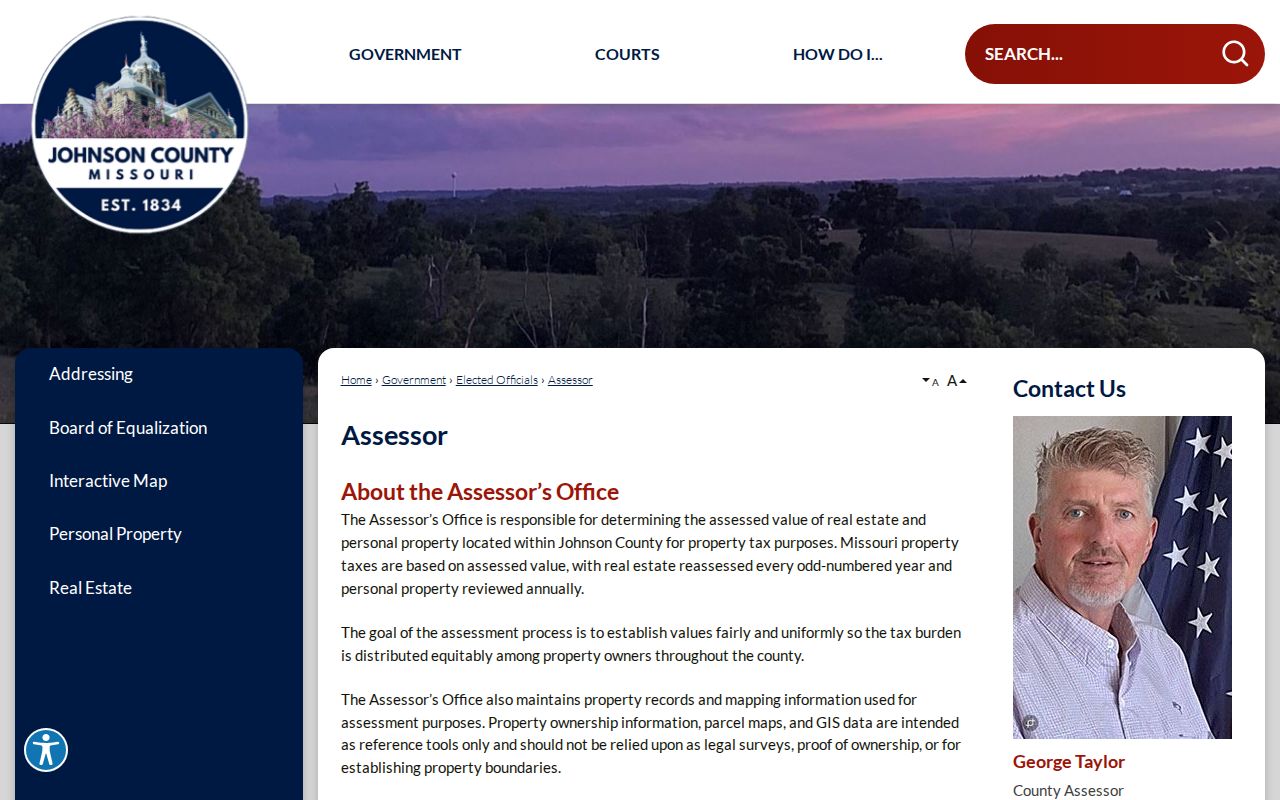
Keep the situs address separate from the owner mailing address. The situs is the physical property location, while tax correspondence may go elsewhere. The legal description, often a lot, block, tract, or subdivision description, is the more durable link when an older Warrensburg address uses a different format.
- Parcel
- A mapped piece of land identified for county property purposes; map lines remain reference tools rather than surveyed boundaries.
- Situs address
- The physical address of the land or building, which can differ from the owner's tax mailing address.
- Legal description
- The recorded lot, block, tract, or other land description used to connect a deed to the right property.
Call the Assessor at 660-747-9822 when a field is not visible in the map. The office is at the South Annex, 1310 S. Maguire Street, Suite B, and lists weekday hours of 8:30 to 4:30. Note: County mapping and ownership data are not legal surveys or proof of ownership.
Warrensburg Deed Trail for Past Residents
The Johnson County deed chain is the ownership backbone for past residents, but it does not by itself prove who occupied a house. The iCounty Recorder search allows a registered user to search, while image preview, printing, and page charges depend on the selected access option. Start with the parcel's current owner and legal description. In deed language, the grantor is the person transferring an interest and the grantee is the person receiving it. That pair can be followed backward through each earlier sale.
The iCounty login and subscription screen shows why an index result and an image are separate access steps.
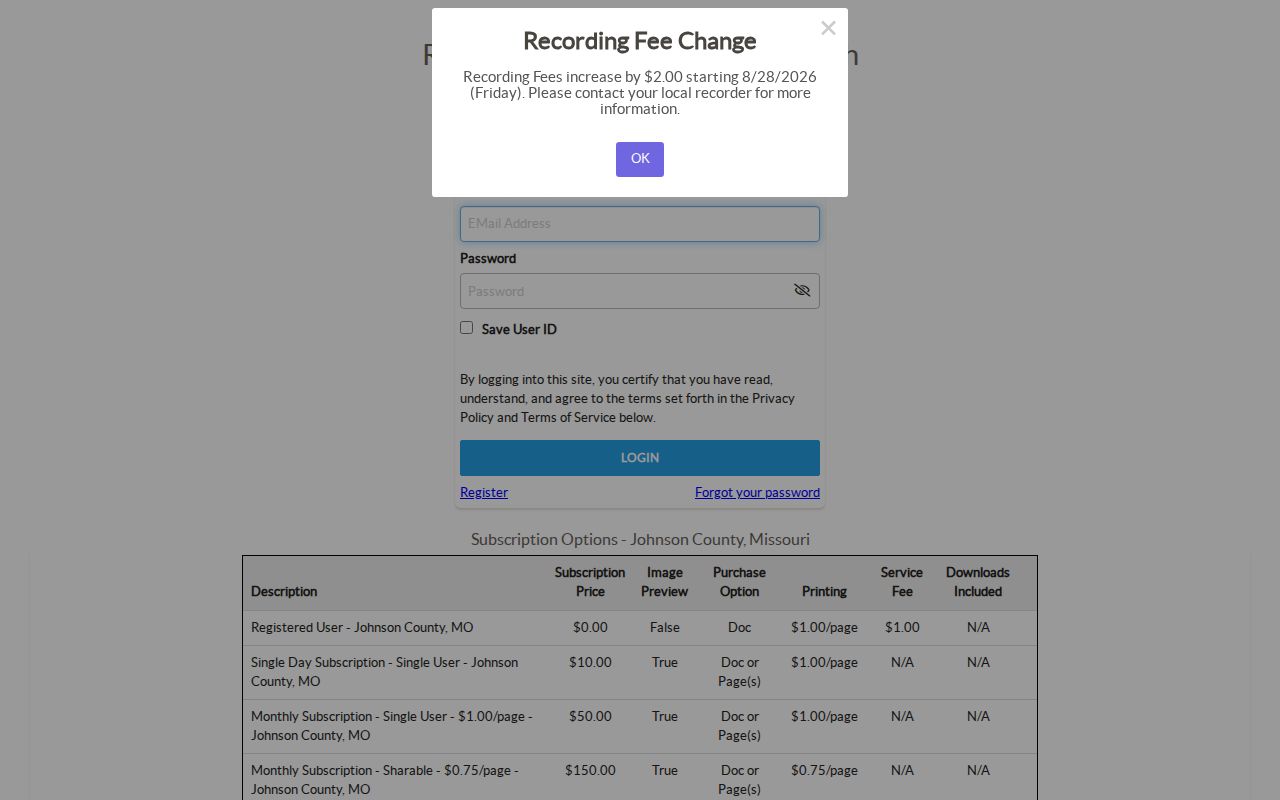
Where a record image is available, compare its names, recording date, document number or book and page, legal description, and any reference to an earlier instrument before adding a link to the chain.
- Record the current parcel's situs, owner label, subdivision or lot and block, legal description, and book or page clue from GIS or the Assessor.
- Search the current owner as grantee in iCounty, then narrow the result with the recording date, document type, legal description, or book and page when those clues appear.
- Read the purchase deed where the access level permits. Capture the seller, buyer, recording reference, and land description rather than relying on a street address alone.
- Search that seller as a grantee to locate the seller's earlier acquisition. Repeat the sequence, checking spouse, trust, estate, and name variants.
- When an online image or index ends, contact the Recorder, use the county Request a Record route, or consult JCHS original deed books from 1834.
A chain of title is this linked sequence of conveyances. Executor's deeds, personal representative's deeds, beneficiary deeds, and affidavits of heirship can explain why a name changes between links. Probate files at the Justice Center may provide supporting estate context, but protected portions may not be open.
1958 Warrensburg Cross-Directory Quirk
Most documented Warrensburg city-directory runs are useful from a name to an address. The 1958 Cross-Directory is the unusual address-first volume, which makes it the practical pivot when the goal is to identify past residents at one known house. Use the address section first, then the alphabetical portion to test the person, business, or name variant that appears. Its existence does not turn the documented years into a complete annual series. The verified runs have gaps, and each volume should be cited by year and repository.
The Johnson County Library Genealogy Desk lists directories, maps, microfilm and microfiche, local yearbooks, research computers, and its 1977-2000 obituary card file.
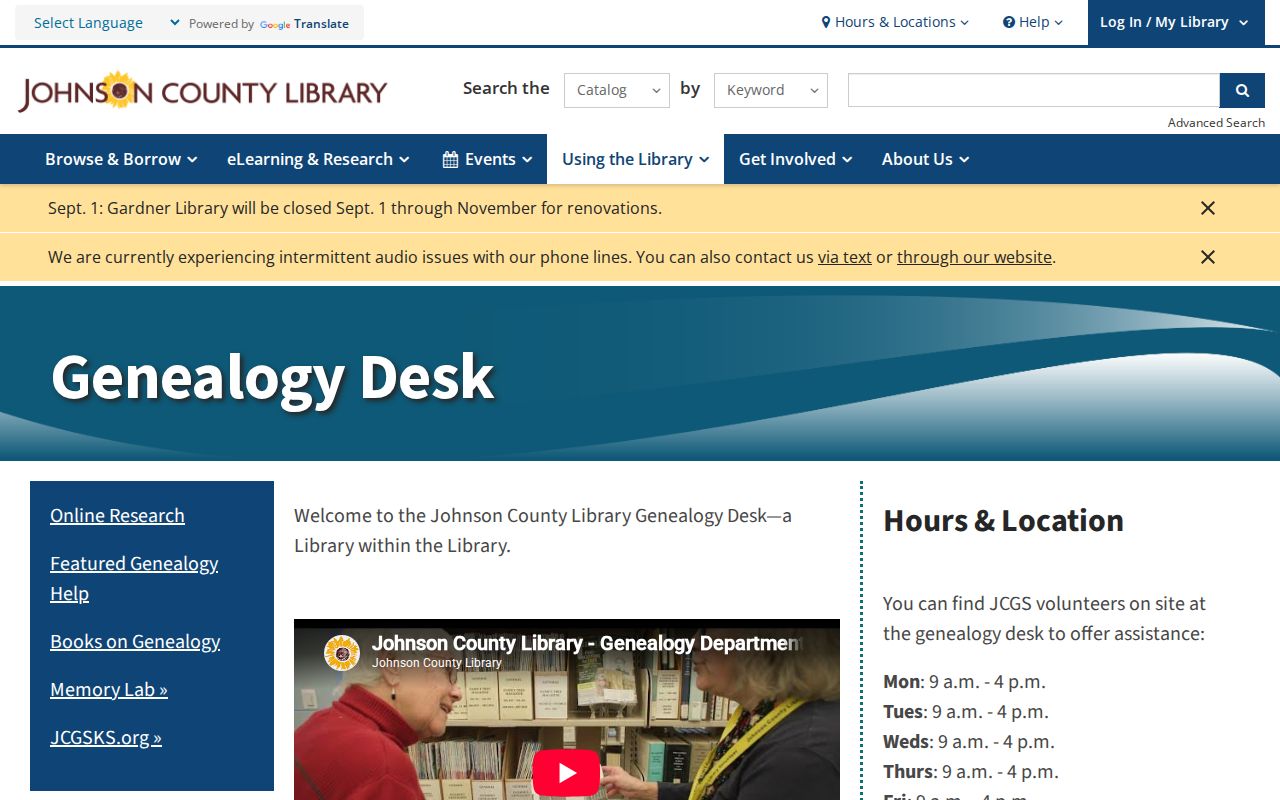
Library and JCGS volunteers staff the desk Monday through Saturday from 9 to 4 and Sunday from 2 to 4. If a needed volume is missing there, the Mary Miller Smiser Heritage Library has a residence database, original local records, plat indexes, family files, and remote-research options. Ask for the source and year behind any volunteer-compiled hit.
Note: A missing directory entry can reflect a volume gap, a name variant, or a listing choice rather than nonresidence.
Warrensburg Past Residents: Index or Originals?
Online and original sources serve different parts of a Warrensburg past-residents search. A free iCounty registration can surface an index trail, but image viewing and printing vary by access tier. The Recorder counter and written-request route remain available when a document cannot be reached online. JCHS holds original deeds, court files, tax and probate records, newspapers, maps, cemetery material, and directories. That makes a repository citation more useful than a bare search result when the trail moves into older property history.
| Access route | Best use |
|---|---|
| iCounty registered search | Locate a current index lead and determine whether a document image is available under the chosen option. |
| Recorder counter or written request | Ask for an instrument, copy, or record direction when online access is incomplete or a historic record needs verification. |
| JCHS and Library research | Pair original county holdings, plats, directories, maps, microfilm, and local indexes with the recorded land trail. |
The Recorder lists the regular courthouse address and a temporary county-office location during the renovation. Call 660-747-6811 before visiting. The current county page also notes that online image access is subscription-dependent, so a failed image view is an access issue to resolve with the custodian, not proof that a sale never happened.
Warrensburg Previous Residents on Sanborn Maps
Sanborn maps give the physical setting for prior-resident research. Warrensburg is documented in local sources for 1883, 1888, 1893, 1898, 1907, 1914, and 1945. These sheets can show building footprints, uses, street and block patterns, and number clues. They do not identify every person who lived inside. Pair a map date with a directory, deed, tax list, or census entry before drawing a conclusion about a household.
The Library of Congress 1907 Warrensburg Sanborn item has eight sheets, image navigation, downloads, metadata, and public-domain access. The Historical Society's 1877 and 1898 plat-map indexes supply a second way to bridge an older lot or block to a later street address. A plat shows lot and subdivision geometry; the deed or recorded plat remains the controlling land record.
Municipal material can help date a building event. The City's Document Center has records reaching back to 1856 and searches by keyword and year. Community Development permit and zoning records may name an applicant or show construction work, but they are dating evidence, not proof of every occupant.
Warrensburg Past Households and Census
Previous residents become a household question only after the ownership trail is paired with address-based and population records. Use the 1958 Cross-Directory for a known mid-century address, then test nearby Warrensburg directory years such as 1955, 1957, 1963, 1967, and 1972. For early urban addresses, compare the documented 1888-89, 1895-96, and 1900-01 runs. An entry can reflect a listed contact rather than title ownership, so preserve the difference between an owner, a directory listing, and a census household.
- Copy the street spelling, house number, initials, business detail, and any cross-reference exactly as printed in the directory.
- Pair 1900-01 with the 1900 census, or the 1955-58 period with the 1950 census, then use adjacent households and enumeration order to check the location.
- Use the National Archives census guidance, Missouri Archives county and tax indexes, and JCHS newspaper or family files when a name or street form differs.
- For the destroyed 1890 population schedules, substitute directories, tax records, deeds, newspapers, cemetery records, and the surviving veteran or widow special census where relevant.
- Close a strong trail with the obituary card file, newspaper microfilm, cemetery sources, probate, or an heirship instrument, and record the year, page, image status, and repository.
The historical directory collections themselves are described on the Warrensburg City Directory page.
Lawful use. Warrensburg house-history research is appropriate for family history, estate work, and personal curiosity. Do not use a record trail to track, threaten, or intimidate any living person.
Note: A historical address match can support house or family history, but it should never be used to locate, contact, or harass a living person.
Warrensburg Previous Resident Address Gaps
Warrensburg address continuity needs its own check. Local sources document old-town and new-town development, historic streets, plats, and preservation surveys, but the research did not locate an official street-renumbering year. Do not assign one from a mismatched directory entry. Instead, bridge an older address through the legal description, subdivision, lot or block, nearby cross streets, and a Sanborn sheet. Test expanded and abbreviated street suffixes and directional prefixes as search variants, then preserve the source's original wording in the citation.
City limits and postal labels add a second source of confusion. A historical record may use Warrensburg as a mailing city even when the parcel lies outside municipal limits, or it may show a rural route or post-office box. The GIS corporate-limit layer and recorded legal description settle jurisdiction questions. USPS verifies present delivery format, but it cannot translate a nineteenth-century address into a deed identity.
Warrensburg Previous Residents Estate Endpoints
Some Warrensburg house trails end with a death, estate, or family transition rather than another ordinary sale. Search Case.net by a decedent's name for a probate lead, then request the estate material from the Circuit Clerk at the Justice Center. In the Recorder index, an executor's deed, personal representative's deed, beneficiary deed, or affidavit of heirship can connect the estate event to the parcel. Medical, financial, sealed, or protected portions of a probate file may remain unavailable.
The Johnson County Library obituary card file, newspaper microfilm, cemetery material, and Historical Society family files can add a printed last-address or relationship clue. Use them to document family history or an estate sequence, not to infer a living person's location. A source log should retain the exact query, record date, repository, and reason the source supports the address trail.